When driving, one of the most critical skills is knowing how long it takes to bring your vehicle to a complete stop. Whether you're approaching a traffic light, avoiding an obstacle, or navigating tricky weather conditions, understanding your vehicle's stopping distance can significantly impact your ability to avoid accidents. Two key terms come into play here: stopping distance and braking distance. Though often used interchangeably, they refer to different aspects of how a vehicle comes to a halt. This article will break down both, focusing on how factors like weather and vehicle condition can affect your overall stopping distance. Lassa attaches importance to road safety and emphasizes the importance of tyre quality in minimizing stopping distances in various driving conditions.
Stopping Distance refers to the total distance a vehicle travels from the moment the driver perceives a need to stop to the point where the vehicle comes to a complete halt. This distance includes two components:
Braking Distance is often the focus when discussing stopping distances, as it is the distance the vehicle travels after the driver engages the brakes. However, the total stopping distance also includes the time it takes for the driver to react to an emergency, making the reaction distance an important consideration. At this point, Lassa's high-quality tyres designed for challenging conditions make a significant difference in driving safety.
Several factors can influence both reaction and braking distances. Here are the key elements:
Vehicle Type: Larger vehicles, such as trucks or SUVs, tend to have longer stopping distances than smaller cars. This is due to their increased weight and less efficient braking systems in some cases.
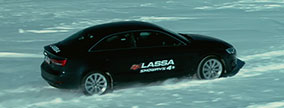
Quite dramatically. Driving on icy roads are notorious for drastically increasing stopping distances. When temperatures drop and ice forms, the friction between the tyres and the road surface diminishes. Under these conditions, even the best brakes can struggle to stop a car effectively.
At speeds of 30 mph, on dry roads, a vehicle may require around 30 feet to stop. However, on icy roads, this distance can increase to 100 feet or more. This is a stark reminder to reduce speed and increase following distance when driving in wintery or icy conditions.
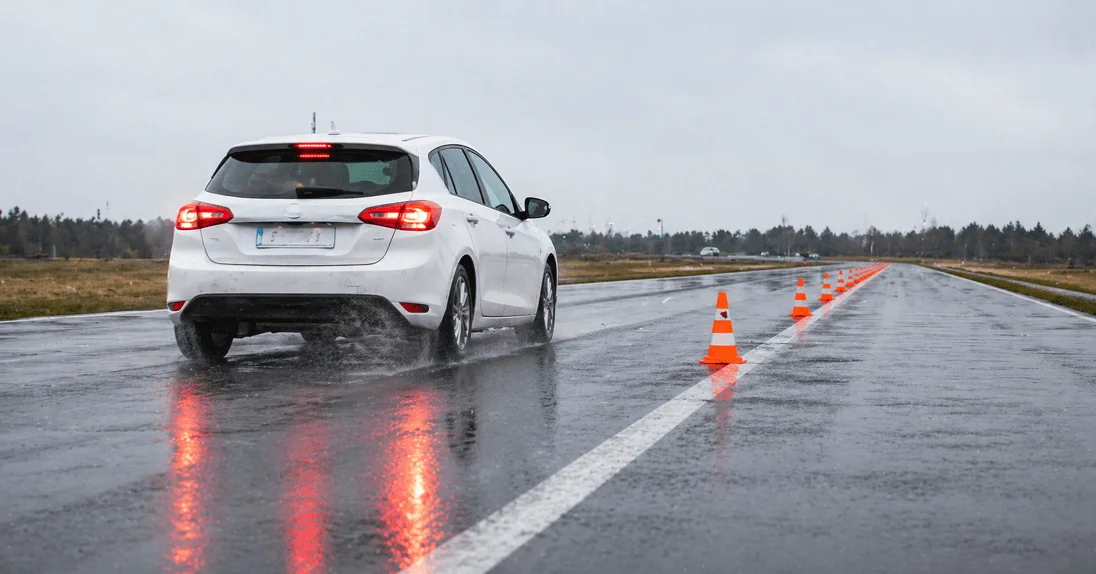
Rain is another weather condition that affects stopping distance, though not as drastically as ice. In the rain, water creates a layer between the tyres and the road surface, reducing traction. On wet roads, braking distances can increase by approximately 50% compared to dry conditions.
For example, a car traveling at 60 mph on dry roads may stop in about 120 feet. On a wet road, the stopping distance could increase to around 180 feet. It's crucial to adjust your speed and ensure that your tyres are in good condition during rainy weather to maintain optimal braking performance. Lassa's all-season tyres with high water drainage design provide shorter braking distances in rainy weather.
For more ways to stay safe, check out our essential driving in rain tips to better prepare for wet conditions.
Your overall stopping distance will increase in various driving conditions, particularly when:
Steep Inclines or Declines: Driving uphill may slightly reduce stopping distance due to gravity, while going downhill can increase it as gravity works against you, requiring more braking power.
Several factors will affect your vehicle's stopping distance:
Brake Efficiency: A vehicle with well-maintained and responsive brakes will have shorter braking distances than one with worn or poorly maintained brakes.
Braking distance specifically refers to the distance a car travels after the brakes are applied until it completely stops. This distance can vary based on speed, road conditions, tire quality, and brake system health. As a general rule, a vehicle traveling at 60 mph will have a braking distance of about 120 feet under optimal conditions.
When driving, it’s important to remember that overall stopping distance includes both the reaction distance (the time it takes to perceive a hazard and react) and the braking distance (the time it takes to stop once the brakes are applied). This means that the total distance to stop can vary widely depending on factors such as the speed of your vehicle, road conditions, and vehicle condition. Lassa tyres deliver superior performance in such conditions, minimizing your braking distance.
Understanding your vehicle's stopping distance and braking distance is crucial for safe driving. These distances are affected by various factors, including weather, road conditions, vehicle maintenance, and your driving habits. By factoring in these elements and adjusting your speed and behavior accordingly, you can significantly reduce your risk of accidents.
For more information on safe driving and to explore tire options that can help reduce your stopping distance, visit Lassa’s wide range of tyres designed for different weather conditions and driving needs. Drive safely, adjust to the conditions, and keep your stopping distance as short as possible.